Weight Loss · GLP-1 / GIP
Tirzepatide
A once-weekly injection that works on two appetite pathways instead of one. In SURMOUNT-1, Zepbound® (tirzepatide) produced a greater average weight reduction than has been reported for single-agonist GLP-1 medications in comparable trials.
Already know this is what you want? The second option books the appointment straight away. Not sure yet? See the labs first.
Your consult is free. We will not prescribe this, or anything, before a clinician has spoken with you. Final cost depends on the form and dose prescribed.

Mechanism
Two receptors, not one.
Semaglutide activates the GLP-1 receptor. Tirzepatide activates GLP-1 and GIP, a second incretin receptor involved in insulin sensitivity and fat metabolism.
The practical effect is that you feel full sooner, stay full longer, and your body handles glucose more efficiently between meals. Most patients describe it as the constant background negotiation with food going quiet.
It is not a stimulant and not a fat burner. It changes appetite signalling, which is why it works only while you take it and why the plan around it matters as much as the molecule.

Protocol
How treatment usually runs.
A typical schedule. Yours is set by your clinician, and adjusted as you go.
| Phase | Weeks | Typical | Purpose |
|---|---|---|---|
| Start | 1–4 | 2.5 mg weekly | Tolerance only. This dose is not expected to drive weight loss. |
| First step up | 5–8 | 5 mg weekly | The first therapeutic dose. Most people notice appetite change here. |
| Build | 9–16 | 7.5–10 mg weekly | Increases continue only if side effects stay manageable. |
| Maintenance | 17+ | 10–15 mg weekly | Held at the lowest dose that keeps progress steady. |
What to expect
Honestly, over time.
Something feels different
Portions get harder to finish. Some nausea, usually 24–48 hours after your shot.
The scale moves
Measurable change begins. Constipation is common, fibre and water matter more than people expect.
The steady stretch
The most consistent loss happens here. Resistance training protects lean mass.
Plateau and maintenance
Loss slows as your body adapts. Your provider discusses maintenance rather than stopping cold.
Evidence
What the research shows.
In the SURMOUNT-1 trial of Zepbound® (tirzepatide), adults with obesity lost an average of roughly 20% of total body weight at the highest dose over 72 weeks, compared with about 3% on placebo.
Trial averages are not promises. Participants received structured lifestyle support alongside the medication and individual results ranged widely. Adherence and dose are the two biggest variables.
Results vary. Clinical trial results apply only to the FDA-approved branded medication specifically identified and do not apply to compounded medications. All medications must be prescribed by a licensed provider based on medical necessity.
Safety and eligibility
Your consult and labs screen for all of the following.
- Do not take if you or a family member has had medullary thyroid carcinoma or Multiple Endocrine Neoplasia syndrome type 2.
- Do not take if you are pregnant, breastfeeding, or trying to conceive.
- Tell your provider about any history of pancreatitis, gallbladder disease, severe gastrointestinal disease, or diabetic retinopathy.
- Common side effects include nausea, constipation, diarrhoea, fatigue and injection-site reaction, most pronounced after a dose increase.
- Seek care immediately for severe persistent abdominal pain, which can signal pancreatitis.
FAQ
Tirzepatide questions.
In the SURMOUNT-1 trial of Zepbound® (tirzepatide), adults with obesity lost an average of about 20% of total body weight at the highest dose over 72 weeks. Individual results vary widely and depend on dose, adherence, diet, activity and medical history.
In comparable trials, tirzepatide produced greater average weight reduction. It is not automatically the better choice for you, tolerance, cost, availability and medical history all factor into what your provider recommends.
Most patients notice reduced appetite within one to two weeks of the first therapeutic dose. Measurable weight change typically appears between week four and week eight and continues as the dose titrates upward.
Nausea, constipation, diarrhoea, fatigue and injection-site reactions. They are most pronounced in the days following a dose increase and usually ease as your body adjusts. Severe persistent abdominal pain requires immediate medical attention.
Not necessarily, but appetite typically returns to baseline after stopping and weight regain is common without a maintenance plan. Your provider will discuss tapering, maintenance dosing and lifestyle strategy before you stop.
Every prescription is written by a licensed provider after a live visit and dispensed by a licensed pharmacy. Your provider prescribes only when it is clinically appropriate for you, orders bloodwork when your treatment calls for it, and reviews you on an ongoing basis.



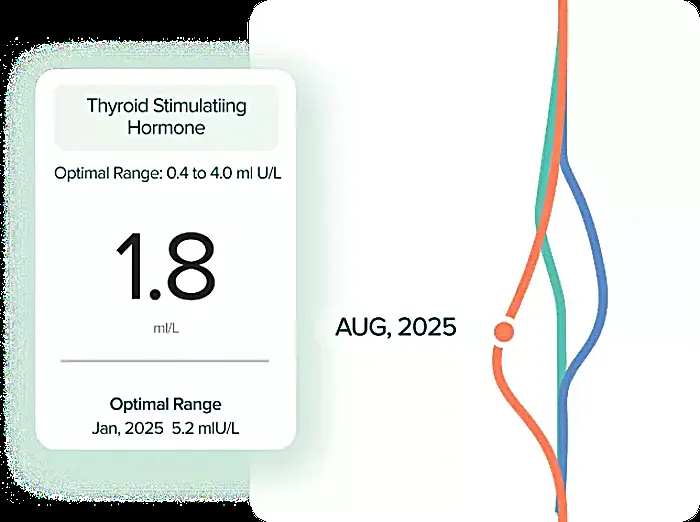
We will not prescribe before we understand you.
Book a one-to-one consult with the clinical team. We talk through your goals, order the bloodwork that matters, and build a plan from what we find.