Cellular Health
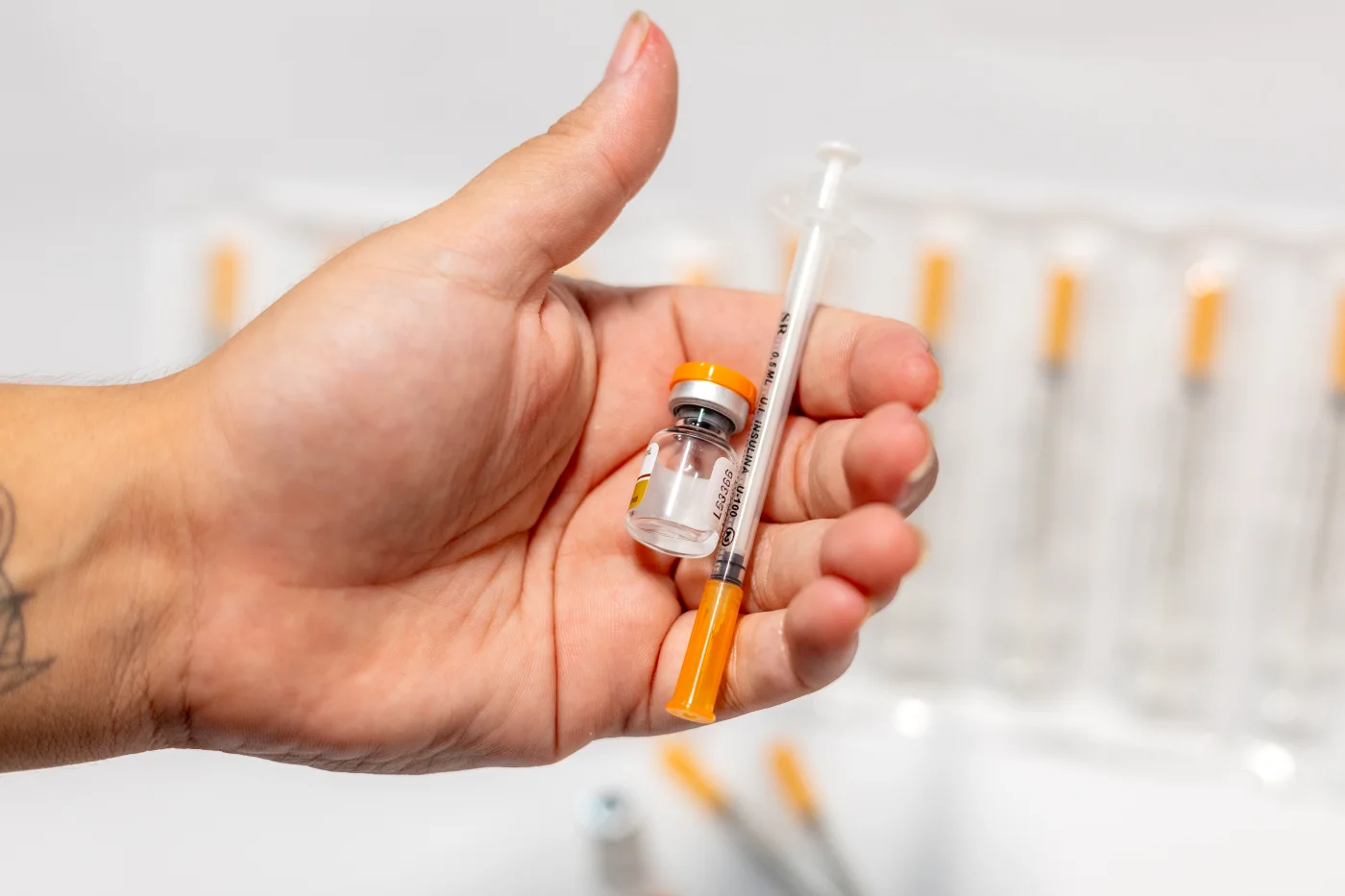
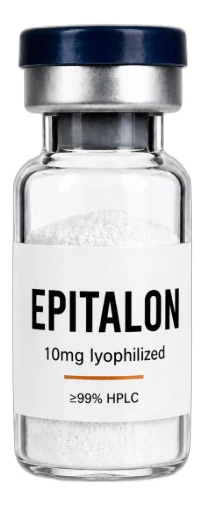
Epithalon Injection
A short synthetic peptide researched in early studies for its possible effects on telomerase activity and sleep-wake rhythm — an area of ongoing research rather than an established anti-aging therapy.
This is a compounded preparation made by a licensed pharmacy. It is not FDA-approved, and it is prescribed only when a licensed provider determines it is appropriate for you.
Already know this is what you want? The second option books the appointment straight away. Not sure yet? See the labs first.
Your consult is free. We will not prescribe this, or anything, before a clinician has spoken with you. Final cost depends on the form and dose prescribed.
Mechanism
Research-stage, not a promise.
Epithalon (also called epitalon) is a synthetic tetrapeptide modeled on a naturally occurring pineal gland compound. Early laboratory research has explored a possible relationship between epithalon and telomerase, an enzyme involved in cellular aging.
It has also been studied in small trials for effects on melatonin production and circadian rhythm, which is why some providers consider it alongside sleep-focused protocols.
Human evidence in this area is still at a very early stage, and it is typically prescribed as a defined, time-limited cycle rather than a continuous therapy.
Protocol
How treatment usually runs.
A typical schedule. Yours is set by your clinician, and adjusted as you go.
| Phase | Weeks | Typical | Purpose |
|---|---|---|---|
| Start | 1–2 | Low dose daily | Subcutaneous injection, typically in the evening. |
| Build | 3–6 | Standard dose daily | Dosed once daily as directed by your provider. |
| Taper / Reassess | 7–10 | Cycle completion | Courses are often limited to 10–20 days, then reassessed. |
What to expect
Honestly, over time.
Early response
Some patients report changes in sleep pattern during the course.
Course completion
Most protocols are time-limited rather than continuous.
Reassessment
Any further course is spaced out and reviewed with your provider, not repeated indefinitely.
Evidence
What the research shows.
Evidence for epithalon's effects on telomerase activity and aging comes almost entirely from early-stage laboratory and small human studies, several conducted decades ago outside the U.S.; it has not been shown in large, modern controlled trials to extend lifespan or reverse aging in humans. No anti-aging or longevity claim should be taken as established fact.
Results vary. Clinical trial results apply only to the FDA-approved branded medication specifically identified and do not apply to compounded medications. All medications must be prescribed by a licensed provider based on medical necessity.

Safety and eligibility
Your consult and labs screen for all of the following.
- Do not use if you have a history of cancer or active malignancy — any peptide studied in relation to cellular proliferation pathways warrants caution in patients with a cancer history; discuss this with your provider first.
- Tell your provider about any hormone-sensitive condition, pregnancy, or medications affecting melatonin or sleep.
- Common side effects include injection-site reaction, mild headache and changes in sleep pattern during the course.
- Not FDA-approved for this use — prescribed at your provider's discretion.
FAQ
Epithalon Injection questions.
No. Epithalon is researched for a possible relationship with telomerase and cellular aging markers, but this hasn't been established in large human trials. It should not be understood as a proven anti-aging treatment.
It's usually given as a short, defined course — often 10 to 20 days of daily injections — rather than as an ongoing daily therapy.
Anyone with a history of cancer should discuss this carefully with their provider, since peptides studied in relation to cell growth and proliferation pathways require extra caution in that context.
Related
Often part of the same plan.

DSIP Injection
Nightly injection