Repair & Recovery
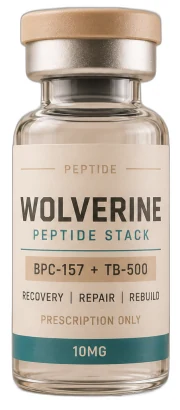
BPC-157 + TB-500 Injection (Wolverine Stack)
A combined BPC-157 and TB-500 injection pairing two peptides studied for tissue repair and mobility — a protocol some patients use for broader recovery support than either peptide alone.
This is a compounded preparation made by a licensed pharmacy. It is not FDA-approved, and it is prescribed only when a licensed provider determines it is appropriate for you.
Already know this is what you want? The second option books the appointment straight away. Not sure yet? See the labs first.
Your consult is free. We will not prescribe this, or anything, before a clinician has spoken with you. Final cost depends on the form and dose prescribed.
Mechanism
Two repair pathways, one injection.
This formulation combines BPC-157 with TB-500 (a synthetic fragment of thymosin beta-4). TB-500 has been studied for its role in cell migration and flexibility, while BPC-157 is studied for localized tissue repair — together they're sometimes used for broader recovery support.
Because the two peptides act through different mechanisms, some patients and providers use the combination for recovery needs that span multiple tissue types rather than a single injury site.
As with the individual peptides, this is typically prescribed as a defined cycle rather than an indefinite daily regimen.
Protocol
How treatment usually runs.
A typical schedule. Yours is set by your clinician, and adjusted as you go.
| Phase | Weeks | Typical | Purpose |
|---|---|---|---|
| Start | 1–2 | Low combined dose once daily | Subcutaneous injection; site may be rotated. |
| Build | 3–6 | Standard combined dose | Dosed once daily or as directed. |
| Taper / Reassess | 7–8 | Continued or tapered | Cycles are typically reviewed at 6–8 weeks. |
What to expect
Honestly, over time.
Early response
Some patients report early changes in comfort or mobility.
Continued recovery
Progress is gradual and highly individual.
Cycle review
Continuation, tapering or a break is discussed with your provider.
Evidence
What the research shows.
Human clinical trial data on combined BPC-157/TB-500 use is very limited; most available evidence on each peptide individually comes from animal and in-vitro research. Claims about combined effects are not established by controlled human studies.
Results vary. Clinical trial results apply only to the FDA-approved branded medication specifically identified and do not apply to compounded medications. All medications must be prescribed by a licensed provider based on medical necessity.

Safety and eligibility
Your consult and labs screen for all of the following.
- Do not use if you have a history of cancer or active malignancy — both BPC-157 and TB-500 are studied in contexts involving tissue and vascular growth, which is a serious consideration for anyone with a cancer history.
- Tell your provider about autoimmune conditions, pregnancy, and any other peptide or hormone therapy you're using.
- Common side effects include injection-site reaction, mild headache and fatigue.
- Not FDA-approved for this use — prescribed at your provider's discretion.
FAQ
BPC-157 + TB-500 Injection (Wolverine Stack) questions.
The stack adds TB-500 to BPC-157, pairing two peptides studied through different mechanisms. Some providers use it for recovery needs that aren't limited to one injury site.
Most protocols run about 6 to 8 weeks, after which your provider reassesses whether to continue, taper, or pause.
No. Both peptides in this combination are studied in contexts involving tissue and blood vessel growth, so a cancer history is an important factor your provider needs to review before prescribing.
Related
Often part of the same plan.
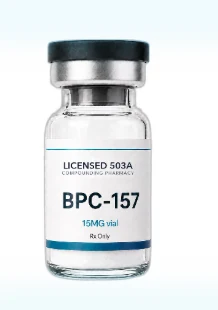
BPC-157 Injection
Subcutaneous injection
BPC-157 / KPV / TB-500 Injection (Repair & Recovery Stack)
Subcutaneous injection